
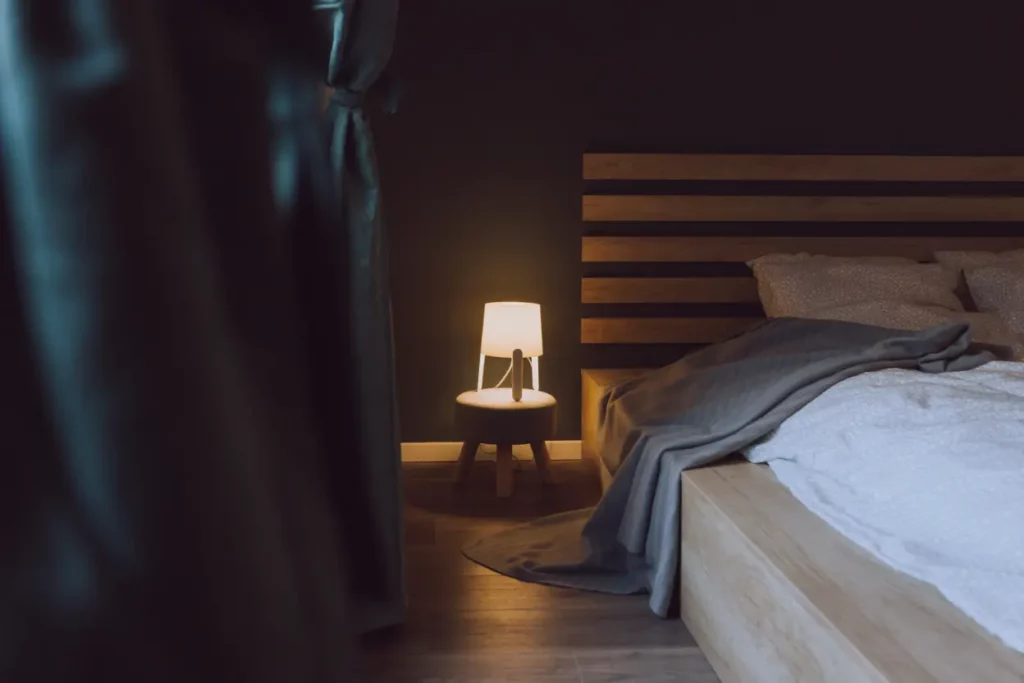
There is a moment every new parent knows well. It is 2 a.m., the baby is fussing, and you need just enough light to see what you are doing — change a diaper, find the pacifier, settle back into the rocking chair for a feeding — without flooding the room with brightness that jolts both of you fully awake. In that moment, the difference between a nursery lamp with dimmer control and one without is the difference between a smooth, sleepy transition and a wide-eyed restart to the night.
Dimmable lighting is not a luxury feature in a nursery. It is one of the most practical, health-conscious, and design-smart decisions you can make when preparing a room for a new baby. At Dominion Lighting, we help families across Northern Virginia and the D.C. metro area design nurseries that are as functional at midnight as they are beautiful at noon. Here is everything you need to know about choosing the right nursery lamp with dimmer capabilities — and why it matters more than you might think.
Why Dimmable Lighting Matters in a Nursery
A nursery is unlike any other room in your home. Over the course of a single day, it shifts from a bright, stimulating play space to a calm feeding area to a dark, quiet environment for sleep — and then, inevitably, it needs to accommodate those middle-of-the-night check-ins where visibility and calm must coexist. No single brightness level can serve all of those needs.
A nursery lamp with dimmer control gives you the ability to match the light in the room to the moment. Bright and clear for daytime play and tummy time. Warm and moderate for story time and evening feedings. Barely a glow for late-night diaper changes and 3 a.m. soothing sessions. This kind of flexibility is not just convenient — it is actively beneficial for your baby’s developing sleep patterns.
The Science of Light and Infant Sleep
Research on light exposure and circadian rhythms has made one thing very clear: the type, intensity, and color of light a baby is exposed to in the hours before and during sleep directly affects melatonin production — the hormone that signals to the body that it is time to rest. Bright light, particularly light with a high proportion of blue wavelengths, suppresses melatonin and tells the brain to stay alert. Even seemingly dim room lighting has been shown to suppress melatonin production in the vast majority of adults and children when used in the evening hours.
For infants, whose circadian systems are still developing, consistent exposure to warm, dim light in the evening and nighttime hours helps establish healthy sleep-wake cycles. A nursery lamp with dimmer control allows you to gradually lower the light level as bedtime approaches, creating a physical cue that reinforces your bedtime routine. Over time, that gradual dimming becomes a powerful signal — one your baby’s body learns to associate with sleep.
This is why pediatric sleep experts overwhelmingly recommend dimmable, warm-toned lighting in nurseries. It is not about aesthetics (though it helps there too). It is about biology.
Choosing the Right Lamp Type
Not every lamp style works equally well in a nursery. Safety, light quality, and practical usability all play a role in determining which type of dimmable lamp is the best fit for your space.
Table Lamps
A dimmable table lamp placed on a dresser or changing table is one of the most versatile options for a nursery. It puts soft, warm light at a useful height — close to where you are actually working during feedings and diaper changes — without the harsh downward glare of a ceiling fixture. Table lamps with fabric shades are particularly well suited to nurseries because the shade diffuses the light, softening it and reducing the kind of concentrated brightness that can be stimulating to a baby.
When choosing a table lamp for a nursery, look for a stable base that will not tip easily if bumped, a shade that stays cool to the touch, and a cord that can be routed safely away from the crib and out of reach of curious hands as your child grows. Position the lamp where it illuminates the area you need — the changing pad, the rocking chair, the feeding spot — without casting direct light toward the crib itself.
Wall Sconces
Wall-mounted sconces are an excellent nursery lighting choice that many parents overlook. Because they are mounted at a fixed height on the wall, sconces eliminate cord hazards entirely and keep the light source well out of reach. A pair of dimmable sconces flanking a crib or positioned near a nursing chair provides warm, ambient light that washes gently across the room without creating harsh shadows.
Sconces also free up surface space on dressers and side tables — valuable real estate in nurseries, where you quickly discover that every flat surface becomes a staging area for bottles, burp cloths, and baby monitors.
Floor Lamps
Floor lamps can work in a nursery, but they require more thought around placement and safety. A floor lamp with a weighted, stable base positioned in a corner behind a nursing chair can provide beautiful, diffused light for evening feedings and story time. However, once your baby begins crawling and pulling up on furniture, a freestanding floor lamp becomes a tipping hazard. If you choose a floor lamp, plan for the day when it may need to be replaced with a wall-mounted or ceiling-mounted alternative.
Ceiling Fixtures With Dimmer Switches
While a nursery lamp with dimmer control often refers to a portable fixture like a table lamp or sconce, do not neglect the room’s overhead lighting. Installing a dimmer switch on your nursery’s ceiling fixture — whether it is a flush mount, a semi-flush pendant, or a small chandelier — gives you one more layer of control over the room’s overall brightness. During the day, you can run the overhead at full output for playtime and cleaning. In the evening, you can dim it down as part of the bedtime wind-down, eventually switching to your dimmable table lamp or sconce alone for the final feeding before lights out.
For parents who want to understand how layered lighting works across every room in the home — not just the nursery — our room-by-room lighting guide explains the principles in detail.
Color Temperature: The Detail That Changes Everything
The brightness level of your nursery lamp is only half the equation. The color temperature of the bulb inside it is equally important — and it is the detail that most parents get wrong.
Color temperature is measured in Kelvin (K). Lower numbers produce warmer, more golden light. Higher numbers produce cooler, bluer light. For a nursery, the sweet spot is firmly in the warm range: 2700K to 3000K. This range produces a soft, amber glow that is soothing to the eye, flattering to skin tones, and — critically — free of the blue wavelengths that interfere with melatonin production.
Avoid bulbs labeled “daylight” or “bright white,” which typically fall in the 4000K to 5000K range. These temperatures are energizing by design. They are excellent for kitchens and home offices, where alertness and color accuracy matter. But in a nursery, particularly in the evening hours, they work against every sleep cue you are trying to establish.
Some of the best nursery bulbs now feature “dim-to-warm” technology, which mimics the behavior of old incandescent bulbs: as you dim them, the color temperature drops, shifting from a neutral warm white to a deep, candle-like amber. This means the light does not just get darker as you dim it — it gets warmer too, naturally reinforcing the body’s transition toward sleep. Dominion Lighting’s guide to LED lighting and how it has evolved covers this technology in depth and explains how to choose bulbs that dim beautifully without the flickering and buzzing issues that plagued earlier LED products.
Dimmer Compatibility: Getting the Technical Details Right
One of the most common frustrations parents encounter is buying a beautiful dimmable lamp, pairing it with a dimmer switch, and discovering that the light flickers, buzzes, or refuses to dim below a certain level. This almost always comes down to compatibility between the bulb and the dimmer.
Not all LED bulbs work with all dimmer switches. Older dimmers designed for incandescent bulbs use a different electrical method to reduce brightness than what most LED bulbs require. The result can be an annoying hum, a visible strobe effect, or a dimming range that only goes from 100 percent down to 40 percent — not nearly low enough for a nursery at night.
The fix is straightforward: make sure your dimmer switch is rated for LED use, and check the bulb manufacturer’s compatibility list before purchasing. Many bulb manufacturers publish lists of recommended dimmer models on their packaging or websites. When in doubt, look for dimmers labeled “LED compatible” or “universal,” and test the combination before committing to a permanent installation.
If you are installing new sconces or a ceiling fixture in the nursery and want to ensure everything works together seamlessly, this is exactly the kind of detail our lighting specialists at Dominion Lighting help with every day. A quick conversation at one of our showrooms can save you from the trial-and-error frustration of mismatched components.
Nursery Safety and Lamp Placement
Lighting safety in a nursery extends beyond bulb temperature and cord management. A few additional considerations will help you create a space that is both well lit and secure.
Keep all light sources at least several feet from the crib. Even a dim lamp emits some heat, and you do not want any fixture within reaching distance of a curious baby who has learned to stand and grab. Position table lamps toward the back of furniture surfaces, not at the edge where they can be pulled down.
Choose LED bulbs over incandescent or halogen options. LEDs produce dramatically less heat, last far longer, and consume a fraction of the energy. In a nursery, where a lamp may be left on at low levels for extended periods, the efficiency and cool operating temperature of LEDs make them the clear choice.
If your nursery has windows, invest in effective blackout curtains or shades. The best dimmable lamp in the world cannot create a dark sleep environment if morning sunlight is streaming through the windows at 5:30 a.m. Managing natural light is just as important as managing artificial light, and the two should be considered together as part of your overall nursery lighting plan.
Building a Complete Nursery Lighting Plan
The ideal nursery does not rely on a single fixture. Like any well-designed room, it benefits from layered lighting — multiple sources serving different purposes that can be used independently or in combination depending on the time of day and the activity at hand.
A strong nursery lighting plan typically includes three elements. First, an overhead ambient fixture on a dimmer switch provides general room illumination for daytime use, cleaning, and playtime. Second, a dimmable table lamp or wall sconce near the nursing chair or changing area serves as task lighting for feedings and diaper changes, particularly in the evening and overnight hours. Third, a low-level nightlight — either a dedicated plug-in unit or a portable rechargeable light — provides the bare minimum of illumination needed for safe nighttime navigation without disrupting the baby’s sleep.
Each of these layers should be controlled independently so you can use just the nightlight for a quick check-in, the table lamp alone for a feeding, or the full overhead for daytime activities. This kind of thoughtful, intentional design is what separates a nursery that works effortlessly from one that requires constant adjustment and compromise.
If you want guidance on how wellness-focused lighting design supports better sleep — for babies and adults alike — our article on wellness lighting and sleep explores the science and practical application in depth.
See and Touch Before You Buy
Choosing a nursery lamp with dimmer capabilities is one of those decisions where seeing the fixture in person makes a real difference. The quality of a fabric shade, the warmth of the light it produces, the smoothness of the dimming range, the weight and stability of the base — these are things you cannot fully evaluate from a product listing on a screen.
We invite you to visit our showrooms in Arlington and Chantilly to explore dimmable fixtures, test different bulb color temperatures side by side, and talk through your nursery lighting plan with a specialist who understands both the design and the practical demands of lighting a baby’s room. With over 300 lines represented in our showrooms, you will find options that range from classic and traditional to modern and minimalist — all with the quality and performance your nursery deserves.
Your baby’s room should be a place of comfort, calm, and safety. The right nursery lamp with dimmer control is a small detail that makes a profound daily difference — from the first feeding of the morning to the last lullaby of the night. Take the time to choose well, and both you and your baby will sleep better for it.
Dominion Lighting is Northern Virginia’s premier residential lighting showroom, with design centers in Arlington and Chantilly. Schedule a complimentary lighting consultation and let our team help you create the perfect nursery.



 English
  Spanish