
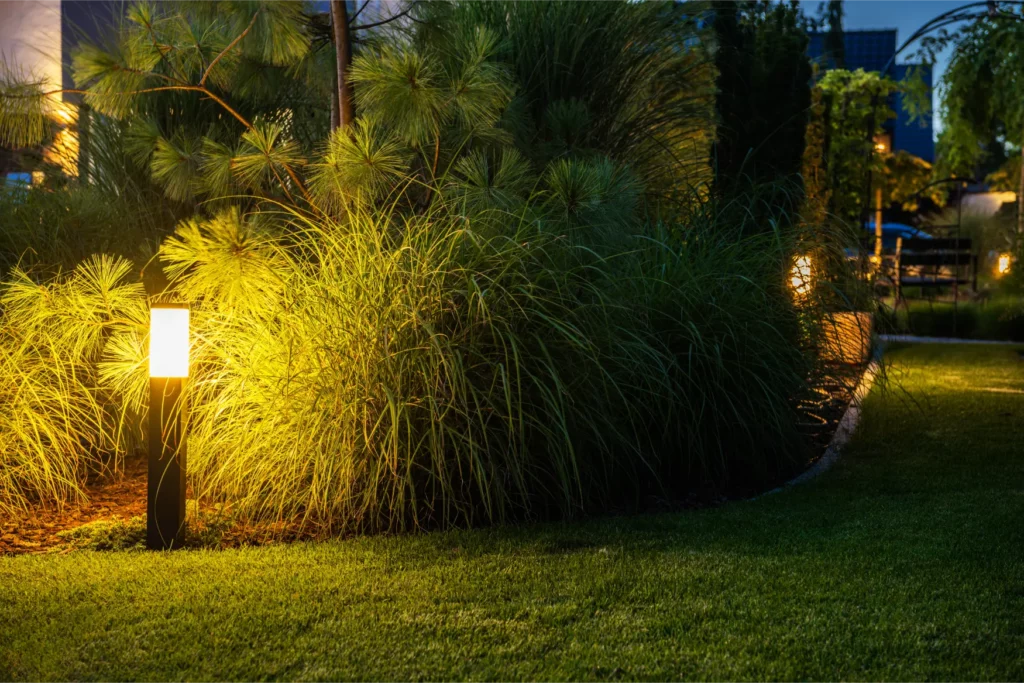
A beautiful garden can disappear when the sun goes down. Landscape lighting brings it back into view, but a successful design requires more than placing a few fixtures along a walkway. Light must support safety, highlight the right features, create depth, respect neighboring properties, and remain practical to maintain.
A landscape lighting designer looks at the entire outdoor environment after dark. They consider the home’s architecture, existing trees and planting, pathways, grade changes, patios, water features, entertaining areas, and the views from inside the house. The goal is to create a balanced nighttime composition that feels intentional without making the property look overlit.
A Designer Begins With How You Use the Property
The first step is understanding what you want from the outdoor space. Some homeowners want better visibility around entries and steps. Others want to extend dinner and conversation onto a patio. You may want to highlight mature trees, show off stonework, illuminate a pool area, or improve the view through large windows after dark.
These priorities shape the design. A front yard focused on arrival needs a different plan from a backyard used for cooking and entertaining. The designer considers where people walk, where task light is needed, and where lower levels create a relaxed atmosphere.
Dominion Lighting’s guide to landscape lighting design explains the core principles, fixture types, and lighting techniques used outdoors.
The Site Is Evaluated in Daylight and Darkness
By day, a designer documents dimensions, power access, planting, architecture, and potential fixture locations. After sunset, glare, dark transitions, reflections, neighboring light, and important sightlines become clearer.
The designer may consider:
- Paths, stairs, driveways, gates, and entrances
- Outdoor kitchens, dining tables, grills, and seating areas
- Trees, textured walls, columns, sculptures, and water features
- Views from living rooms, kitchens, and bedrooms
- Areas where fixtures could be damaged by mowing or landscaping
- Seasonal changes in leaves, plant growth, and outdoor use
- Existing exterior lights and control locations
This assessment helps the designer prioritize what should be lit and what should remain in shadow.
The Plan Uses Layers, Not One Bright Source
Landscape lighting feels more natural when it uses several controlled layers. Path lighting can support navigation. Uplighting can reveal the trunk and canopy of a tree. Downlighting may create a softer pool of light from above. Grazing can emphasize stone or brick texture, while silhouetting can turn a distinctive plant or sculpture into a focal point.
The designer selects the technique according to the subject. A narrow tree may need a different beam than a wide façade. A dining table needs usable light without glare in guests’ eyes. Steps need clear visibility, but not runway-style rows of fixtures.
Our collection of outdoor lighting ideas can help homeowners identify effects and features they would like to discuss during planning.
Fixture Selection Goes Beyond Appearance
Outdoor fixtures must withstand changing weather and landscape conditions. A designer considers construction, finish, output, beam spread, color temperature, glare control, mounting, and serviceability.
Not every fixture must look identical. Some should disappear into planting, while decorative sconces or lanterns become part of the architecture. Concealed fixtures should direct attention toward the illuminated feature rather than themselves.
Coordinate color temperature with the property’s materials and atmosphere. Mixing unrelated light colors without a clear reason can make the design feel fragmented.
Controls Make the Landscape Easier to Use
Outdoor lighting does not need to operate at full output all night. Timers, astronomical scheduling, dimming, motion response, and smart controls can match light levels to how the property is used.
An early evening scene may support arrival and entertaining. A later scene can reduce decorative lighting while keeping entrances and pathways appropriately illuminated. Vacation schedules can create predictable operation without daily input.
Controls should be convenient, but the system should also be easy for the household to understand. The designer can coordinate outdoor scenes with an existing or planned smart lighting system where appropriate.
Designers Coordinate the Technical Details
A complete plan may identify fixture types, approximate locations, aiming, zones, controls, transformers or drivers, and power requirements. The lighting designer coordinates the design intent with the electrician, landscape contractor, builder, architect, pool contractor, or irrigation team.
During renovations, trenches, sleeves, hardscape, planting, and electrical work should occur in the right sequence. Planning ahead protects finished patios and established landscaping.
Qualified professionals must verify electrical capacity, wiring methods, equipment suitability, installation requirements, and applicable local rules. The lighting design guides the visual and functional outcome, while the installation team ensures the system is implemented correctly.
Maintenance Is Part of Good Design
Landscapes change as plants grow, mulch shifts, and fixtures become covered. The plan should allow equipment to be reached, cleaned, aimed, and protected.
Review the completed system at night. Aiming and dimming adjustments can correct glare and improve balance. Periodic checks keep the design working as the garden matures.
When Should You Hire a Landscape Lighting Designer?
Professional input is especially valuable when the property has multiple outdoor rooms, significant landscaping, complex architecture, grade changes, extensive hardscape, or an integrated control system. It is also useful when homeowners want a refined result but are unsure which features deserve attention.
Visit one of Dominion Lighting’s Northern Virginia lighting showrooms to compare fixtures, finishes, light quality, and design options in person. A thoughtful plan can turn the property into a layered nighttime environment that feels welcoming, safe, and connected to the home.



 English
  Spanish