
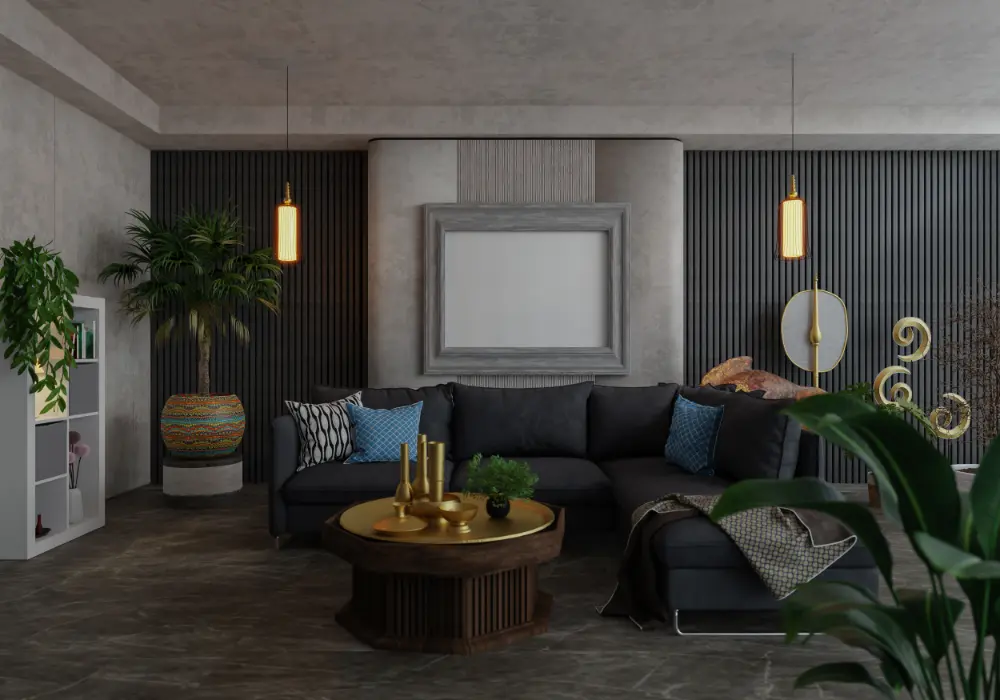
A room that lacks natural light can feel uninviting, small, and even damp. Whether you are dealing with a basement living area, a north-facing bedroom, or a hallway with no windows at all, the challenge remains the same. You must find a way to introduce brightness without creating a space that feels clinical or harsh. At Dominion Lighting, we believe that every corner of a home has the potential to shine. Achieving the perfect lighting for a dark room requires a strategic approach that goes beyond simply buying the brightest bulb available. It involves understanding how light interacts with surfaces, how our eyes perceive depth, and how different layers of illumination work together to simulate the warmth of the sun.
The Psychology and Science of Brightening a Space
Before choosing fixtures, it is helpful to understand why certain rooms feel dark even when a light is turned on. Often, the issue is not a lack of total light but a lack of even distribution. If you have one powerful overhead light in the center of a dark room, it creates high-contrast shadows in the corners. These shadows make the walls feel like they are closing in, which contributes to a cramped atmosphere. To combat this, you need to minimize high-contrast areas and focus on vertical illumination.
When you light the walls of a room rather than just the floor, the space immediately feels larger. This is a primary principle used in professional lighting design to transform challenging floor plans. By reflecting light off the vertical surfaces, you trick the brain into perceiving more volume and openness. This approach is essential for any dark room where the goal is to create a sense of airy comfort.
The Three Layers of Light
To effectively solve the problem of a dark room, you must implement a three-layered lighting plan: ambient, task, and accent lighting.
Ambient lighting provides the general illumination for the room. In a dark space, relying solely on a single flush-mount ceiling fixture is usually a mistake. Instead, consider recessed lighting spaced evenly across the ceiling. This provides a consistent “wash” of light that eliminates dark pockets. If you cannot install recessed lights, a large chandelier or a series of track lights can serve a similar purpose, provided they are capable of spreading light toward the edges of the room.
Task lighting is functional. In a dark room, everyday activities like reading, cooking, or working become much more difficult. Floor lamps, desk lamps, and under-cabinet lighting are vital. These sources provide the intensity needed for specific actions without requiring the entire room to be blasted with high-intensity light.
Accent lighting is the secret weapon for dark rooms. By using spotlights or picture lights to highlight artwork, bookshelves, or architectural features, you add depth. This prevents the room from looking flat and dull. Accent lights draw the eye around the space, which makes the room feel more dynamic and lived-in.
Choosing the Right Fixtures and Finishes
Not all light fixtures are created equal when it comes to dark rooms. Transparent or translucent shades are often better than solid metal or thick fabric shades. A glass pendant light allows light to escape in all directions, whereas a metal dome directs light only downward. For a room that is naturally dim, you want as much “spill” as possible to reach the walls and ceiling.
The choice of bulbs is equally important. At Dominion Lighting, we carry an extensive selection of top-tier brands that specialize in high-quality LED technology. When shopping for bulbs, look at the Kelvin rating. For a dark room, you typically want a “warm white” or “soft white” range, roughly between 2700K and 3000K. Anything higher might look too blue and cold, while anything lower might look too yellow and muddy in a windowless space. High Color Rendering Index (CRI) bulbs are also a must. A high CRI ensures that the colors of your furniture and paint look vibrant rather than gray or washed out.
The Power of Reflective Surfaces
Lighting does not exist in a vacuum; it relies on the surfaces it hits. In a dark room, every design choice should support the lighting plan. Mirrors are a classic trick for a reason. By placing a large mirror opposite a light source, you effectively double the amount of light in the room. Even the finish of your light fixtures matters. Polished chrome, brass, or glass elements on a lamp will catch and bounce light around the room, adding small points of brilliance that contribute to the overall brightness.
Similarly, consider the finish of your walls and ceiling. A matte paint absorbs light, while a satin or eggshell finish reflects it. You do not necessarily need to paint every dark room white, but choosing colors with a high Light Reflectance Value (LRV) will help your fixtures do their job more efficiently.
Seeing the Difference in Person
It can be difficult to visualize how different layers of light will behave in your specific home just by looking at a catalog. This is why we encourage our clients to visit our showrooms to experience these effects firsthand. In a controlled environment, you can see how a wall-wash fixture differs from a standard downlight. You can compare the glow of different shade materials and see how various color temperatures affect the mood of a room. Seeing the equipment in action helps take the guesswork out of your renovation project.
Our showrooms are designed to inspire. You can see how modern technology, such as smart dimming systems, can allow you to adjust your lighting for a dark room throughout the day. In the morning, you might want a bright, energizing atmosphere, while in the evening, you may prefer a softer, golden glow that mimics a sunset. Smart controls make this transition seamless.
Overcoming Specific Architectural Hurdles
Some dark rooms have unique challenges, such as low ceilings or awkward alcoves. In a room with a low ceiling, avoid hanging fixtures that might make the ceiling feel even lower. Instead, use floor lamps that direct light upward (torchiere lamps). By illuminating the ceiling, you create the illusion of height. For alcoves or recessed shelving, LED tape lighting is an excellent solution. It is thin, easy to hide, and provides a continuous line of light that can make a dark corner feel like a focal point.
If your room is dark because it is long and narrow, like a basement hallway, use a series of wall sconces. Sconces provide rhythm and break up the length of the wall, while also providing that essential vertical illumination we discussed earlier. The goal is always to lead the eye through the space with light.
Why Quality Matters
When dealing with a room that lacks natural light, you cannot afford to use low-quality fixtures or bulbs. Poorly designed LEDs often flicker or produce a green or purple tint that can make a dark room feel sickly. Investing in high-quality lighting ensures that the light is steady, the colors are accurate, and the fixtures themselves are durable. At Dominion Lighting, we have spent decades sourcing the best products in the industry to ensure our customers get the best results.
A well-lit room is a functional room. It becomes a place where you want to spend time, rather than a place you avoid. Whether you are reading a book, hosting a dinner party, or simply relaxing after a long day, the quality of your light dictates your experience.
Partnering with the Experts
If the prospect of redesigning your home’s lighting feels overwhelming, remember that you do not have to do it alone. The team at Dominion Lighting is here to guide you through every step of the process. From selecting the initial fixtures to technical advice on installation, we have the knowledge to help you succeed.
If you are ready to say goodbye to dim corners and uninviting spaces, please contact us today. We can discuss your specific needs and help you build a comprehensive plan to bring light into your home. No room is too dark to be saved, and with the right strategy, your most neglected spaces can become your favorite parts of the house. Proper lighting for a dark room is not just about visibility; it is about creating an environment that feels healthy, vibrant, and warm. Let us help you turn the lights on in your home with confidence and style.


 English
  Spanish