
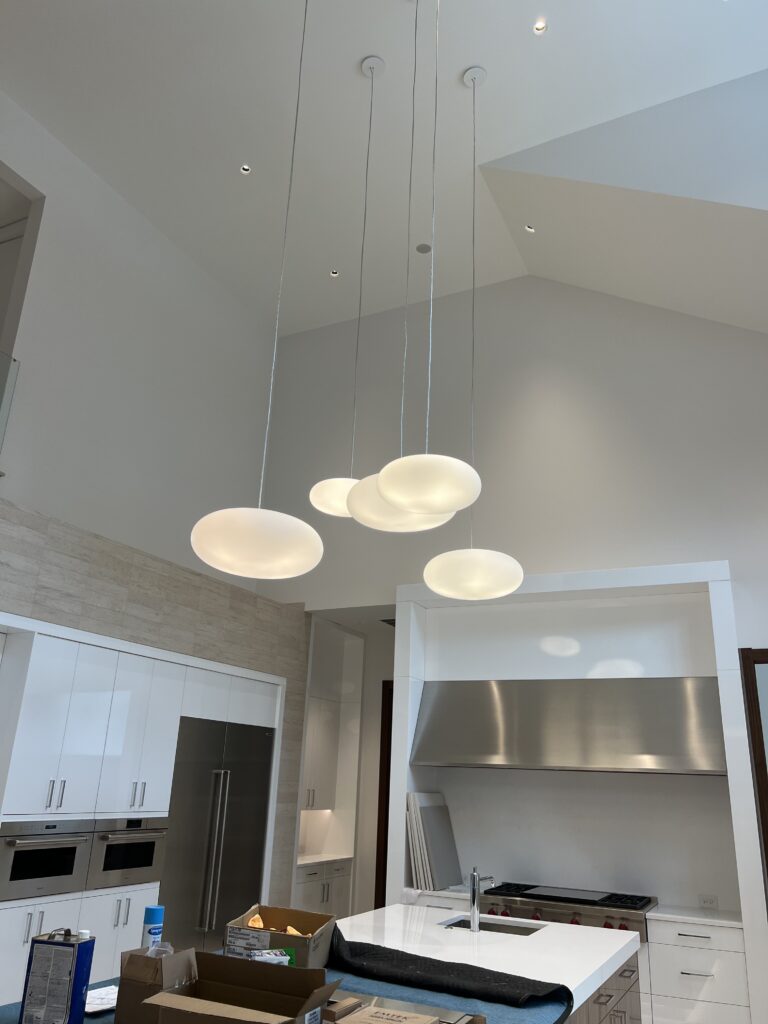
High ceilings can make a home feel open, impressive and architecturally distinctive. They create a sense of scale that standard-height rooms cannot always achieve. However, they also present a lighting challenge.
A single fixture installed high above the floor may look dramatic during the day but fail to provide enough usable light at night. Other homeowners make the opposite mistake and install an extremely bright fixture that creates glare without properly illuminating the lower part of the room.
Effective high ceiling lighting requires more than selecting an oversized chandelier. The room needs several complementary light sources positioned at different heights.
Why Are High Ceilings Difficult to Light?
The greater the distance between a light source and the surfaces below it, the more difficult it becomes to distribute light evenly.
A fixture mounted near a tall ceiling may produce enough light on paper, but much of that illumination can remain concentrated near the upper part of the room. The seating area, artwork, tables and walking surfaces may still feel dark.
Tall rooms may also have:
- Large windows that create significant differences between daytime and nighttime conditions
- Architectural beams that cast shadows
- Upper walls that feel empty after sunset
- Multiple activity zones within one open space
- Staircases or balconies overlooking the room
- Limited access for cleaning and replacing bulbs
The lighting plan must address the entire volume of the room rather than only the ceiling.
Begin With the Room’s Purpose
Before choosing fixtures, consider how the room will be used.
A two-story foyer requires comfortable illumination for welcoming guests and moving safely through the entrance. A high ceiling living room may need softer light for relaxing, stronger task lighting for reading and accent lighting for artwork.
A vaulted kitchen or open-plan great room may require even more precise lighting because food preparation, dining, entertaining and family activities all take place in the same space.
List the main activities that occur in the room. This will help determine where focused task lighting is needed and where softer atmospheric lighting is more appropriate.
Homeowners planning a larger project can explore Dominion Lighting’s residential lighting solutions before finalizing fixture locations.
Use More Than One Lighting Layer
The most successful tall rooms use a combination of ambient, task and accent lighting.
Iluminación ambiental
Ambient light provides the room’s overall level of illumination. In a high ceiling space, it may come from a chandelier, large pendant, recessed fixtures or architectural lighting.
The central fixture should provide useful light, but it should not be expected to do everything.
Iluminación de trabajo
Task lighting supports specific activities. Floor lamps beside seating, table lamps on consoles and focused lights near desks or reading chairs bring illumination closer to the people using the room.
This lower layer prevents the space from feeling dim even when the ceiling is several feet above the furniture.
Iluminación de acento
Accent lighting draws attention to artwork, stonework, beams, shelves and other architectural details.
Wall washers and directional fixtures can also illuminate tall vertical surfaces. This prevents the upper part of the room from disappearing into darkness and makes the full height feel intentional.
Choose a Fixture That Matches the Scale
Small fixtures can look lost in rooms with substantial ceiling height. However, choosing the largest fixture available is not automatically the right solution.
The fixture should relate to the dimensions of the room, the furniture arrangement and the visual weight of the architecture.
A delicate chandelier may still work in a large room when it has sufficient height and an open structure. A compact but visually solid fixture may feel heavier than a wider design made from thin metal or glass.
Consider how the fixture will look from several positions:
- From the room’s entrance
- From seating areas
- From an upstairs balcony
- Through exterior windows
- From directly beneath it
A fixture that appears correctly proportioned in a catalog image may feel very different when suspended inside a two-story room.
Determine the Right Hanging Height
The appropriate hanging height depends on what is beneath the fixture.
A chandelier over a dining table can hang lower because people do not walk directly beneath it. A fixture in an open foyer or living room requires sufficient clearance for movement.
The bottom of the fixture should feel visually connected to the room without becoming an obstacle. Hanging it too close to the ceiling can make it appear detached from the furniture below. Hanging it too low may interrupt sightlines or make the room feel crowded.
Vaulted ceilings may also require special mounting equipment or an adjustable canopy. The fixture specifications should be reviewed before ordering.
Illuminate the Walls
One of the most common mistakes in high ceiling lighting is focusing only on horizontal surfaces.
Tall walls form a large portion of what people see. If they remain dark, the entire room can feel unbalanced.
Lighting artwork, textured materials, curtains or architectural details adds visual depth. Wall washing can create a broad, even effect, while directional accent lights provide stronger contrast.
Sconces may also help bring part of the lighting closer to eye level. In a two-story foyer, vertically arranged sconces can emphasize the architecture while making the entrance feel more welcoming.
Plan for Natural Light Changes
High ceiling rooms often include large windows. During the day, natural light may make artificial illumination seem unnecessary. After sunset, the same room can suddenly feel flat or cavernous.
A flexible lighting system allows the room to respond to these changing conditions.
Separate controls should be considered for the central fixture, recessed lights, wall lighting and lamps. Dimming provides even more flexibility, allowing homeowners to create comfortable settings for everyday use, entertaining and quiet evenings.
A professional lighting design consultation can help coordinate fixture output, placement and controls before electrical work is completed.
Consider Maintenance Before Installation
High fixtures can be difficult to clean, adjust or repair. Consider maintenance access before choosing an intricate design or a fixture with exposed horizontal surfaces that collect dust.
Long-lasting light sources can reduce how frequently bulbs need to be changed. Where replaceable bulbs are used, confirm that suitable replacements will remain accessible.
Motorized lifts may be considered for particularly large chandeliers, although they must be planned during the electrical and structural stages of a project.
The weight of the fixture also matters. Large chandeliers and pendants may require additional ceiling support. Installation should always follow the manufacturer’s requirements and be completed by suitably qualified professionals.
Bring the Lighting Closer to Daily Life
The best high ceiling lighting does not simply illuminate the upper part of the room. It connects the architecture above with the activities happening below.
A well-planned combination of chandeliers, pendants, recessed lighting, wall illumination and lamps can make a tall room feel both impressive and comfortable.
Rather than selecting a fixture based only on appearance, view its scale, materials and light quality in person. Homeowners can visit a Dominion Lighting showroom to compare options and begin building a coordinated plan for their space.



 Spanish
  English