
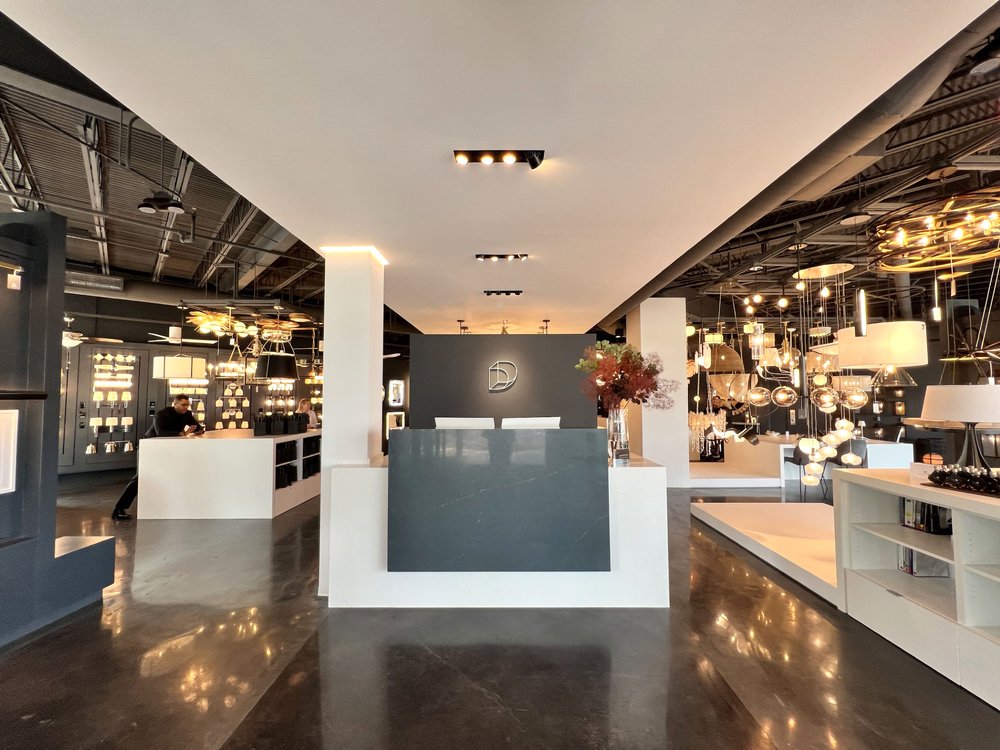
Commercial accent lighting directs attention toward merchandise, artwork, architecture, signage, reception desks, and brand features. Used well, it creates visual hierarchy. Used poorly, it can cause glare, uneven brightness, distracting reflections, and unnecessary energy use.
The strongest accent-lighting plans begin with a clear question: what should people notice first? The answer will be different in a retail store, hotel lobby, restaurant, office, gallery, or healthcare environment. Once the focal points are established, designers can select the right light source, beam, location, output, and controls.
Accent Lighting Is One Layer of the Design
Accent lighting does not replace ambient or task lighting. Ambient light provides general visibility. Task lighting supports specific activities. Accent lighting adds emphasis and contrast.
These layers must work together. If the background is extremely bright, accent light may need excessive output to remain visible. If the overall space is too dark, strong accent points can feel harsh and uncomfortable. A balanced design creates enough contrast to guide attention without making the space visually tiring.
Dominion Lighting’s overview of commercial lighting design shows how technology, sustainability, custom solutions, and user experience shape modern projects.
Begin With the Customer or Occupant Journey
Walk through the space in the order a visitor will experience it. What is visible at the entrance? Where should the eye move next? Which products, service points, displays, or architectural elements communicate the organization’s identity?
In retail, accent lighting may lead customers toward new products, promotional displays, and category destinations. In hospitality, it can create a sense of arrival and draw attention to reception, artwork, materials, and seating areas. In offices, accent light can reinforce the brand in a lobby, illuminate graphics, and add depth to collaboration spaces.
This journey prevents the design from giving everything equal visual weight. When every object is highlighted, nothing feels special.
Select the Right Beam for the Feature
Beam spread determines how concentrated or broad the illuminated area will be. A tight beam can highlight a small object or create a dramatic focal point. A wider distribution may suit a large artwork, merchandise wall, textured surface, or architectural plane.
Distance, mounting height, and aiming angle affect the size and intensity of light. Designers may use track heads, recessed adjustable fixtures, linear lighting, wall washers, grazers, or concealed sources depending on the feature.
Photometric information helps predict performance. Mockups are valuable for reflective finishes, important focal points, or repeated lighting details.
Control Glare and Reflections
Accent fixtures are often aimed toward objects people will view directly. Poor placement can put the bright source in a customer’s line of sight or reflect it in glass, polished stone, metal, screens, and display cases.
Shielding, louvers, careful aiming, and beam control reduce glare. Review normal viewing positions, not only the floor plan. A spotlight that works from one location may create a reflection from another.
Retail displays deserve particular care because shelves, packaging, mirrors, and glass change frequently. Our guide to retail lighting design explores how lighting supports presentation, navigation, and customer experience.
Use Color Quality to Protect the Brand Experience
Light changes how colors, textures, food, fabrics, artwork, finishes, and people appear. Select sources that render important materials consistently.
Color temperature also shapes atmosphere. Warmer light may suit intimate hospitality spaces and natural materials, while neutral or cooler light can support some modern or technical settings. Let the brand, merchandise, architecture, and ambient light guide the choice.
Consistency across replacement lamps, integrated fixtures, and project phases is essential. Noticeable shifts in color can make a commercial space look poorly maintained even when every fixture still operates.
Make the System Flexible
Commercial spaces change. Retailers replace displays, restaurants adjust table layouts, galleries rotate artwork, and offices update branding. Adjustable fixtures and well-planned circuits can make these changes easier.
Track systems, aiming flexibility, separate zones, dimming, and scene controls allow the lighting to respond without major electrical alterations. A daytime setting may require more output than an evening event. A retail promotion may need a different focal point from the standard layout.
For spaces with unusual proportions, custom details, or distinctive brand requirements, custom commercial lighting design can help align the fixtures and effects with the project vision.
Coordinate Accent Lighting With Architecture
The best accent lighting feels integrated rather than added later. Fixture locations should be coordinated with ceiling grids, structure, mechanical equipment, sprinklers, signage, millwork, displays, and furniture.
Confirm mounting and access before ordering. A fixture may be unsuitable if the ceiling cannot support it, aiming is blocked, or maintenance access is limited. Drawings should identify the intended target for the installer.
Controls, emergency lighting, and code-required illumination must also be coordinated with the decorative concept. Accent lighting supports the experience, but it does not replace required functional lighting.
Review the Result After Installation
Commissioning is the final design step. After finishes, furniture, artwork, signage, and merchandise are in place, review the lighting from normal viewpoints. Aim adjustable fixtures, balance dimming levels, confirm scenes, and correct glare or spill light.
Record the final settings and provide the facility team with fixture schedules, replacement information, control instructions, and maintenance guidance. This helps preserve the design as staff and displays change.
Dominion Lighting works with businesses, designers, architects, and project teams to create lighting that supports both function and identity. Contact Dominion Lighting to discuss the focal points, architecture, schedule, and commercial goals for your next project.



 English
  Spanish